
Industrial Science. Domesticated.
We didn't invent composting—we miniaturized a mature aerobic process used in industrial contexts, and publish method-defined summaries for verification.
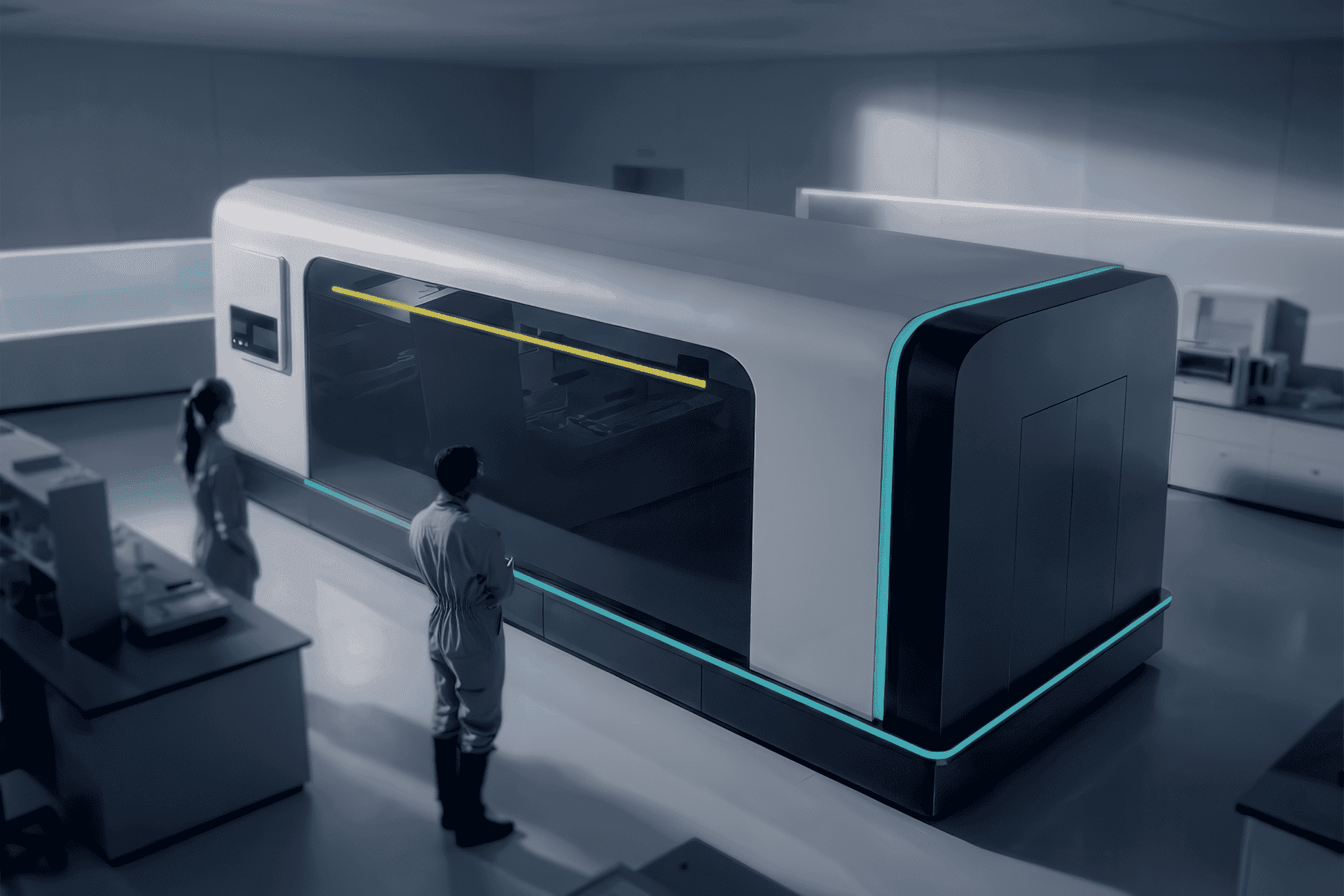

VERIFICATION (GK)
What you can verify here
This page defines our claims, our measurement logic, and the boundaries of what we do—and do not—claim.
METHODOLOGY
Methodology (summary)
- Data:device activity + modeled input ranges
- Baseline:typical landfill anaerobic disposal vs aerobic processing
- Outputs:waste diverted, compost output, CO₂e (modeled)
Boundaries
- • Not a guarantee for every household or location.
- • Assumptions are disclosed and revised as data improves.
IMPACT METRICS
Metric definitions
Waste diverted
Definition:Estimated total food waste processed by active GEME devices.
How estimated:Modeled from device activity and average input ranges.
Depends on:Inputs, user patterns, and cycle frequency.
Not an exact measurement of every gram added.
CO₂e prevented (modeled)
Definition:Estimated emissions avoided vs typical landfill disposal.
How estimated:Modeled using published factors + usage estimates.
Depends on:Local waste systems and composition.
Not a guarantee of savings in all regions.
Soil created (compost output)
Definition:Estimated mass of ready-to-use compost produced by GEME.
How estimated:Based on moisture content and input composition.
Depends on:Moisture content and inputs affect yield.
Not "topsoil created"; compost output only.
CO₂e MODEL
How CO₂e is modeled
Baseline comparison
We compare an aerobic processing scenario to a typical landfill anaerobic disposal scenario, where methane risk is materially higher.
GWP definition →Why results are shown as a range
Landfill practices, organics collection rates, and regional factors vary widely. We display a range to reflect this uncertainty.
Calculator assumptions →Model inputs (high-level)▼
Key inputs include: waste mass estimates, methane factors (GWP100), local disposal pathway assumptions, and sensitivity ranges.
See assumptions table →ASSUMPTIONS
Assumptions & sensitivity ranges
| Assumption | Range / Value | Notes |
|---|---|---|
| GWP timeframe | 100-year (GWP100) | Used for comparability; values vary by report. |
| Waste input estimate | Modeled range | Based on device activity patterns. |
| Disposal pathway | Typical landfill baseline | Regional variance acknowledged. |
| Moisture / yield | Varies by inputs | Affects compost output mass. |
| Uncertainty display | Range output | Presented as a range, not a single point. |
TERMS
What "28×" refers to
"28×" refers to methane's Global Warming Potential vs CO₂ over a 100-year timeframe (GWP100).
This is why landfill methane risk is a meaningful baseline in climate accounting.
PROCESS
Designed to minimize methane risk
Mechanism: Aerobic conditions
GEME is designed for aerobic processing, which reduces conditions where methane is typically produced (anaerobic environments).
- Aerobic airflow + controlled temperature range
- Microbiome-driven digestion (Kobold™)
- Designed to avoid anaerobic pockets
What we do not claim
- We do not claim "zero methane" in all conditions.
- Results depend on inputs, loading patterns, and user practices.
CALCULATOR
How the calculator works
Inputs
Weekly waste input is an estimate. We translate it into modeled annual ranges based on typical usage patterns.
Output
Outputs are shown as an estimated range (not a single point) to reflect regional variance.
Limits
This tool does not account for every local pathway or household behavior. It is an educational estimate, not an audit.
DISCLOSURES
Verification & partners
Reduction-first: we prioritize real diversion. Partners, support disclosed climate actions and do not replace reduction.

What: ClimatePartner supports verified climate action projects.
How: We disclose scope and assumptions for any supported actions.
Not: This does not prove "zero impact" and does not substitute diversion.
What: Stripe Climate enables support for carbon removal research and projects when configured.
How: If enabled at checkout, we disclose what portion and what it covers.
Not: It is separate from our diversion claims and does not replace them.
30-Second Verification Summary (Findings)
Deep Dive: Evidence Drawer
1Composition Compliance▼
Officially classifies as
Compost.
Verified by Eurofins · Report AR-25-T1
Analysis confirms the output meets the strict composition requirements of Article 17 (Dutch Fertilizers Act). It is not just "dried waste"—it is biologically transformed organic matter.
Source Documentation
Organic Matter (Dry Basis)
Significantly higher than typical industrial compost. Preserves carbon structure for soil health.
Nutrient Profile
Acidity (pH)
Slightly acidic. Ideal for neutralizing alkaline soils or generic garden use.
2Operating Temperature Distribution▼
GEME cycles dynamically. The histogram below shows the time-percentage spent in each operating band (N=500 active cycles).
3Method Limitations & Boundaries▼
Definition of "Breakdown"
When we say "6–8 hours," we refer to visual volume reduction and entry into a high-activity substrate phase.
Hard Input Limitations
- ×Large dense bones
- ×Oyster/clam shells
The Macro Context: Why We Do This
The Silent Crisis: Organic Depletion
Intensive agriculture has stripped soil organic matter (SOM). Healthy microbial activity requires a carbon-rich structure to retain water and nutrients.

Organic matter remains structured and biologically usable.
"There is no such thing as waste, only misplaced resources".
Kitchen scraps are nutrient-dense biological inputs. By processing them locally (in your kitchen) rather than landfilling, you return Nitrogen, Phosphorus, and Potassium directly to the earth.
Proven on an industrial scale.
Before it was adapted for the kitchen, GK technology was used in large-scale environmental applications. These case summaries provide industrial context and reference points.
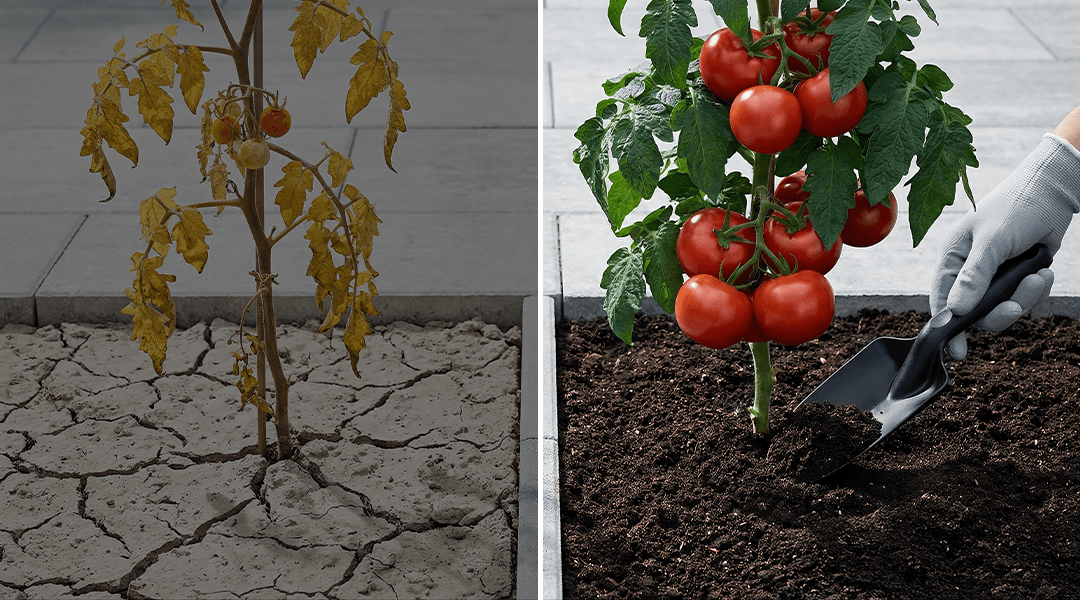
79 Years vs. 1 Year
Controlled references show faster soil organic matter improvement than natural accumulation under comparable conditions.
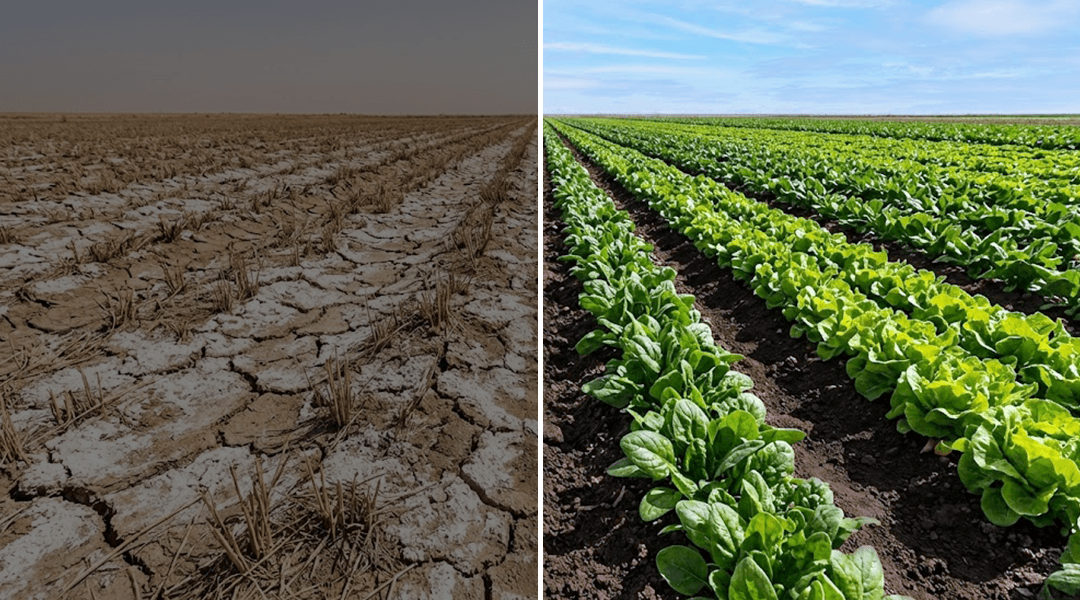
Contaminated Soil Recovery
Deployed in remediation settings to support biological recovery and pollutant reduction.
A multi-strain aerobic consortium
Elevated-temperature aerobic conditions
Airflow & gentle turning
→ Designed to help kitchen scraps break down quickly, with many foods becoming visually unrecognizable within hours—while compost maturity varies in a continuously-fed system.
Get GEME Terra II